Category: Blog

  • Surah Baqarah Last 3 Ayat – Meaning, Benefits & Lessons

    Did you know the last three ayat of Surah Baqarah are among the most powerful verses in the Quran? These verses are full of guidance, mercy, and protection. Many Muslims read them daily, especially before going to sleep, to seek Allah’s help and peace in their lives.
    In this blog, we’ll explore the meaning, benefits, and deep lessons of the surah baqarah last 3 ayat in a simple way that anyone can understand.

    What Are the Last 3 Ayat of Surah Baqarah?

    Here are the last 3 verses (Ayat 284–286) of Surah Al-Baqarah:

    Arabic Text:
    You may include Arabic verses here in a beautiful font or image.

    English Translation:

    Verse 284:
    To Allah belongs whatever is in the heavens and the earth. Whether you show what is within yourselves or hide it, Allah will call you to account for it. Then He will forgive whom He wills and punish whom He wills. And Allah is over all things competent.

    Verse 285:
    The Messenger has believed in what was revealed to him from his Lord, and [so have] the believers. All of them have believed in Allah and His angels and His books and His messengers. They say, “We make no distinction between any of His messengers.” And they say, “We hear and we obey. [We seek] Your forgiveness, our Lord. And to You is the [final] destination.”

    Verse 286:
    Allah does not burden a soul beyond what it can bear. It will have [the consequence of] what [good] it has gained, and it will bear [the consequence of] what [evil] it has earned. Our Lord, do not punish us if we forget or make a mistake. Our Lord, do not place a burden on us like that which You placed on those before us. Our Lord, do not make us bear what we cannot handle. Pardon us. Forgive us. Have mercy on us. You are our protector, so help us against the disbelieving people.

    Meaning and Message of These Verses

    Let’s look at what these beautiful verses are teaching us:

    • Verse 284 reminds us that Allah knows everything, even our thoughts. He is fair and powerful, and we should be mindful of our actions.
    • Verse 285 shows us the importance of believing in all prophets and submitting fully to Allah. It shows the strong faith of the Prophet Muhammad (PBUH) and his followers.
    • Verse 286 is a heartfelt dua (prayer) asking for Allah’s mercy, forgiveness, and support. It reminds us that Allah never gives us more than we can handle.

    Benefits of Surah Baqarah Last 3 Ayat

    Spiritual Benefits

    • Brings peace and protection from evil and jinn.
    • Strengthens faith and connection with Allah.
    • Helps with nighttime anxiety and stress.
    • Provides light and blessings in the home.

    Everyday Benefits

    • Reminds us to stay honest and humble.
    • Helps build positive habits and self-reflection.
    • Inspires patience during difficult times.

    What the Hadith Say About These Verses

    The Prophet Muhammad (PBUH) said:

    “Whoever recites the last two verses of Surah Al-Baqarah at night, they will be enough for him.”Sahih Bukhari

    This shows that these verses are very special and protective. Many scholars believe this means the verses will protect you from harm and give you enough spiritual power for the night.

    Why These Ayat Are a Powerful Dua

    The last verse, Ayat 286, is a beautiful dua that covers everything we need:

    • Asking for forgiveness if we make a mistake.
    • Asking Allah not to give us burdens we can’t handle.
    • Requesting mercy, strength, and victory.

    You can recite this verse when you’re feeling weak, overwhelmed, or lost; it’s a prayer for help and hope.

    How to Use These Verses in Daily Life

    Want to add the surah baqarah last 3 ayat to your routine? Here are some simple tips:

    • Recite them before sleeping every night.
    • Memorize them one by one, understanding the meaning.
    • Listen to a Quran recitation of these verses while commuting or relaxing.
    • Write them down and keep them near your bed or on your wall.

    Tafsir Highlights – Deeper Wisdom from the Ayat

    According to Tafsir Ibn Kathir, these verses were revealed as a gift during the Night Journey (Isra wa Mi’raj). Allah showed His mercy by lifting the burden from believers and teaching them to turn to Him with trust and love.

    These verses highlight:

    • Justice and mercy of Allah.
    • The importance of obedience.
    • The reality that Allah is always near and listens to our prayers.

    Conclusion (Surah Baqarah Last 3 Ayat)

    The surah baqarah last 3 ayat are not just beautiful verses; they’re a powerful source of peace, protection, and guidance. Make them a part of your daily life. You’ll feel a stronger connection with Allah and find comfort in His words.

    Try reciting these verses tonight. You might be surprised by the peace they bring.

    FAQs About Surah Baqarah Last 3 Ayat

    Q1: Can I read the last 3 ayat before sleeping?
    Yes, it’s highly recommended in Hadith and gives protection throughout the night.

    Q2: Are these ayat effective against black magic?
    Yes, many scholars say regular recitation can protect against evil influences.

    Q3: What does the last verse ask for?
    It’s a dua asking for forgiveness, mercy, and strength.

    Q4: Do I have to read all three verses or just the last two?
    Reading all three is best, but the last two are especially recommended.

    Q5: Can I listen to them instead of reading?
    Listening is good, but reciting with understanding brings more reward.
  • Surah Toba Last Ayat – Meaning, Tafsir & Lessons

    Have you ever felt sad, alone, or like no one understands your pain? The last ayat of Surah Toba is one of those verses that brings peace to the heart. It reminds us that the Prophet Muhammad ﷺ cared deeply for us and that Allah is always kind and merciful. In this blog, we’ll explore the Surah Toba last ayat, its meaning, tafsir (explanation), and how we can apply it in daily life. Let’s begin.

    Arabic Text of Surah Toba Last Ayat

    لَقَدْ جَآءَكُمْ رَسُولٌۭ مِّنْ أَنفُسِكُمْ عَزِيزٌ عَلَيْهِ مَا عَنِتُّمْ حَرِيصٌ عَلَيْكُم بِٱلْمُؤْمِنِينَ رَءُوفٌۭ رَّحِيمٌۭ

    Surah Toba Last Ayat in Urdu & English

    Urdu Translation:

    تمہارے پاس ایک رسول آیا ہے تم میں سے، جس پر تمہاری تکلیف بہت بھاری ہے، وہ تمہاری بھلائی کا بہت خواہشمند ہے، اور ایمان والوں پر نہایت شفیق مہربان ہے۔

    Simple English Translation:

    A Messenger has come to you from your own people. Your troubles are very hard on him. He cares deeply about your well-being. And he is kind and merciful to the believers.

    Tafsir – Simple Explanation of Surah Toba Last Ayat

    Let’s understand this ayah step by step:

    • “A Messenger has come to you from your own people.”
      • The Prophet ﷺ is one of us. He speaks our language, understands our culture, and feels our pain.
    • “Your troubles are hard on him.”
      • Whenever we are in pain, he feels it too. He doesn’t want us to suffer.
    • “He is deeply concerned about your well-being.”
      • The Prophet ﷺ always wanted good for us, both in this life and the next.
    • “He is kind and merciful to the believers.”
      • The Prophet ﷺ showed love, care, and patience, especially to those who believed in Allah.

    This ayah shows us the beautiful character of our Prophet ﷺ. It also reflects Allah’s mercy because He sent such a caring Prophet to guide us.

    Lessons from Surah Toba Last Ayat

    Here are some key lessons:

    • We are never alone. The Prophet ﷺ understood us better than anyone else.
    • He always wanted relief for his Ummah, not hardship.
    • Allah chose a messenger full of kindness, not anger or harshness.
    • This verse reminds us that Allah’s mercy is always near.

    When Was This Ayat Revealed?

    The Surah Toba last ayat is one of the final verses revealed to the Prophet ﷺ before he passed away. Some scholars say this verse came after the Farewell Hajj. It was like a final message of love and care for the Ummah.

    How Can We Use This Ayah in Daily Life?

    Here are a few ways:

    • Recite it for peace: This verse brings comfort during stress or sadness.
    • Reflect on its meaning: Think about the love of the Prophet ﷺ for you.
    • Memorize it: It’s a short ayah that’s easy to learn. You can also set a reminder on your phone to read it daily.
    • Teach children: Help your kids understand the kind nature of the Prophet ﷺ.

    Benefits of Reciting Surah Toba Last Ayat

    While no specific hadith mentions special rewards for reciting this ayat, it is widely respected for reflection and peace of heart. Some of the emotional benefits include:

    • Feeling closer to the Prophet ﷺ
    • Gaining hope when life feels hard
    • Remembering that Allah always cares for us

    Final Words

    The Surah Toba last ayat is like a warm hug from Allah and His Messenger ﷺ. It reminds us that we are not forgotten. The Prophet ﷺ loved us, cared for us, and guided us with kindness.

    Next time you feel down, read this ayah slowly. Let its words enter your heart. And remember, Allah is always Ra’uf and Raheem.

    FAQs About Surah Toba Last Ayat

    1. What is the main message of this ayah?

    The love and care of the Prophet ﷺ for his people.

    2. Can I read this when I’m sad?

    Yes, it brings peace and hope.

    3. Is there any reward for reciting it?

    No specific reward is mentioned, but it’s great for reflection.

    4. Why is Surah Toba without ‘Bismillah’?

    It starts with warning, not mercy, so Bismillah was not added.

    5. Can kids memorize this ayat?

    Yes, it’s short and meaningful.

    6. Should I read this daily?

    It’s good to read and reflect often.

    7. Is this verse only for Muslims?

    It talks about the Prophet’s kindness, mainly toward believers.

    8. What tafsir should I read for more info?

    Tafsir Ibn Kathir and Tafsir Jalalayn are good options.

    9. Can I share this verse with non-Muslims?

    Yes, it shows the loving nature of Islam.

    10. Is this ayah good for motivation?

    Definitely, it brings hope and reminds us of Allah’s mercy.

  • Surah Hashr Last 2 Ayat – Translation and Powerful Lessons

    Have you ever thought about why many scholars motivate us to recite the last 2 ayat of Surah Hashr every day? These verses are not only beautiful in language but very deep in meaning. They highlight the glorious names of Allah, bringing comfort, protection, and peace to those who recite them with seriousness.
    Let’s explore these ayat in detail, uncover their translation, and learn some powerful lessons we can apply in our daily lives.

    Surah Hashr Last 2 Ayat in Arabic

    Here are the last two verses (Ayah 23–24) of Surah Hashr:

    اللَّهُ لَا إِلَٰهَ إِلَّا هُوَ ۖ الْمَلِكُ الْقُدُّوسُ السَّلَامُ الْمُؤْمِنُ الْمُهَيْمِنُ الْعَزِيزُ الْجَبَّارُ الْمُتَكَبِّرُ ۚ سُبْحَانَ اللَّهِ عَمَّا يُشْرِكُونَ

    هُوَ اللَّهُ الْخَالِقُ الْبَارِئُ الْمُصَوِّرُ ۖ لَهُ الْأَسْمَاءُ الْحُسْنَىٰ ۚ يُسَبِّحُ لَهُ مَا فِي السَّمَاوَاتِ وَالْأَرْضِ ۖ وَهُوَ الْعَزِيزُ الْحَكِيمُ

    English Translation of the Last 2 Ayat

    [59:23] He is Allah, there is no deity except Him – the King, the Pure, the Source of Peace, the Giver of Faith, the Overseer, the Almighty, the Compeller, the Superior. Exalted is Allah above whatever they associate with Him.

    [59:24] He is Allah – the Creator, the Inventor, the Fashioner; to Him belong the best names. Whatever is in the heavens and earth is exalting Him. And He is the Almighty, the Wise.

    Tafsir Summary – What These Ayat Teach Us

    These verses mention several names of Allah – each reflecting His power, mercy, and authority. According to Tafsir Ibn Kathir, these verses describe the complete attributes of Allah, both in His being and His actions. The repetition of “He is Allah” highlights His uniqueness and reminds us that no one shares His attributes.

    Some names mentioned:

    • Al-Malik (The King) – Owner of everything
    • Al-Quddus (The Pure) – Free from all defects
    • As-Salam (The Source of Peace) – Giver of safety and peace
    • Al-Khaliq (The Creator) – Creator of all things from nothing

    Each of these names tells us something about how we should view Allah and how we should rely on Him.

    Powerful Lessons from Surah Hashr Last 2 Ayat

    1. Know Allah Through His Names

    These verses contain some of the most beautiful names of Allah. When we understand these names, our faith becomes stronger and our connection with Him becomes more personal.

    2. Daily Protection and Peace

    The Prophet Muhammad ﷺ recommended reciting verses that mention Allah’s names, especially for morning and evening protection. These ayat bring calmness and drive back fear and tension.

    3. A Reminder of Who Is in Control

    In times of stress or confusion, these verses remind us that Allah is Al-Aziz (The Almighty) and Al-Hakim (The Wise). Everything happens under His wisdom and command.

    4. A Daily Dose of Tawakkul (Trust in Allah)

    Reading these ayat regularly builds trust in Allah’s plan. They remind us that He is our supporter and knows what’s best for us.

    Benefits of Reciting These Verses Daily

    • Spiritual and emotional peace
    • Brings you closer to Allah
    • Boosts focus in prayer and zikr
    • Builds a habit of connecting with Allah’s names
    • According to hadith, mentioning Allah’s names regularly is beloved by Him

    Tips to Memorize and Reflect

    • Start slow – one line at a time
    • Listen to audio from trusted Qaris
    • Write the verses and keep them visible at home
    • Use a pocket Quran app to read and revise
    • Reflect on one name of Allah each day

    Conclusion (last 2 ayat of Surah Hashr)

    The last 2 ayat of Surah Hashr are more than just verses, they are a way to knowing Allah deeply and trusting Him completely. They hold immense spiritual value and emotional comfort. Start by reading them every day, reflect on their meanings, and watch how your heart finds peace in His names.

    FAQs – Surah Hashr Last 2 Ayat

    1. What are the last 2 ayat of Surah Hashr?

    They are verses 23 and 24, describing Allah’s names and attributes.

    2. Can I recite them at any time?

    Yes, but reciting them in the morning and evening is highly recommended.

    3. Do these ayat offer protection?

    Yes, they are known for offering spiritual and emotional protection.

    4. Are these ayat part of the morning/evening adhkar?

    Many scholars include them in daily adhkar due to their virtues.

    5. Is there any specific reward for reciting these verses?

    Mentioning Allah’s names brings blessings and increases closeness to Him.

    6. Can children memorize these verses?

    Absolutely! They are a great way to teach kids the names of Allah.

    7. Is there a dua version of these ayat?

    While not a dua, these verses are a powerful form of dhikr (remembrance).

    8. Can I recite them without wudu?

    Yes, but it’s better to be in a state of cleanliness.

    9. What is the best time to reflect on these names?

    After prayer or before sleeping is ideal for deep reflection.

  • Surah Tauba Last Two Ayat – Meaning, Benefits & Why You Should Recite Them Daily

    A Peaceful End to a Powerful Surah

    Surah Tauba (Chapter 9 of the Quran) is known for its strong message about truth, repentance, and justice. It is also one of the few Surahs in the Quran that does not begin with “Bismillah.” But despite its strict tone, the Surah Tauba last two ayat (verses 128 and 129) are full of love, hope, and trust in Allah.

    These final verses are often recited for peace of mind, protection, and spiritual strength. Let’s explore their meaning, benefits, and how you can add them to your daily life.

    Arabic Text of the Last Two Verses

    Verse 128 & 129:

    لَقَدْ جَاءَكُمْ رَسُولٌ مِّنْ أَنفُسِكُمْ عَزِيزٌ عَلَيْهِ مَا عَنِتُّمْ حَرِيصٌ عَلَيْكُم بِٱلْمُؤْمِنِينَ رَءُوفٌۭ رَّحِيمٌ
    فَإِن تَوَلَّوْا۟ فَقُلْ حَسْبِىَ ٱللَّهُ لَآ إِلَـٰهَ إِلَّا هُوَ ۚ عَلَيْهِ تَوَكَّلْتُ ۖ وَهُوَ رَبُّ ٱلْعَرْشِ ٱلْعَظِيمِ

    You can also find these ayat in calligraphy or audio form on Quran apps for better learning and recitation.

    Translation in Simple English

    Verse 128:
    Indeed, a Messenger has come to you from among yourselves. It hurts him to see you in trouble. He cares deeply for you and is kind and merciful to the believers.

    Verse 129:
    But if they turn away, say: “Allah is enough for me. There is no god but Him. I trust Him, and He is the Lord of the mighty throne.”

    Meaning & Tafsir (Explanation)

    • Verse 128 tells us about the Prophet Muhammad ﷺ and his deep love and concern for his followers. He doesn’t want to see anyone suffer and always tried to guide with kindness.
    • Verse 129 teaches us to rely fully on Allah. Even if others reject the truth or walk away, we should trust in Allah. He is powerful and takes care of everything.

    Many scholars like Ibn Kathir explain that these verses give hope and remind us of Allah’s mercy and support in difficult times.

    Why These Verses Are So Special

    • They remind us of the Prophet’s love and concern.
    • They teach us to stay strong when others don’t support us.
    • They help us build strong Tawakkul (trust in Allah).
    • The tone is soft and full of love, unlike most of the Surah.

    That’s why many Muslims make it a habit to read the Surah Tauba last two ayat every day.

    Benefits of Reciting Surah Tauba Last Two Ayat

    Here are some benefits people have experienced by reading these verses regularly:

    • Brings peace to the heart
    • Increases trust in Allah during hard times
    • Reminds us of the Prophet’s kindness
    • Helps reduce anxiety and fear
    • Encourages patience and gratitude

    Tip: Try reading them in the morning to start your day with positivity.

    When & How to Recite These Verses

    • After Fajr prayer (morning prayer)
    • Before going to sleep at night
    • During stress, fear, or anxiety
    • When facing difficult decisions

    Read slowly, try to understand the meaning, and reflect on how it relates to your life.

    Do Any Hadith Mention These Ayat?

    There is no specific Hadith about these exact verses. However, many general Hadith tell us about the power of Quranic verses and how they bring protection, healing, and mercy from Allah.

    So even if not directly mentioned, these verses carry blessings just like other powerful parts of the Quran.

    Unique Points About Surah Tauba

    • It is the only Surah that starts without Bismillah.
    • It warns hypocrites and encourages repentance.
    • The last two ayat are different – they feel gentle, loving, and hopeful.

    This shows how the Quran balances justice with mercy, ending even a stern Surah with love and trust.

    Final Thoughts

    The Surah Tauba last two ayat are short but full of meaning. They remind us of the love of the Prophet ﷺ and the power of trusting Allah. Life can be hard, but these verses give us strength and peace.

    Try to learn them, understand them, and make them a part of your daily routine. You will feel the calmness they bring.

    FAQs About Surah Tauba Last Two Ayat

    Q1: What are the Surah Tauba last two ayat in Arabic?
    A: They are verses 128 and 129 of Surah Tauba. The Arabic is included above in this post.

    Q2: What do these verses mean?
    A: They show the Prophet’s care for believers and teach us to trust Allah.

    Q3: Can I read these verses when I’m feeling anxious?
    A: Yes, many people find peace by reading them during stress.

    Q4: Are these verses mentioned in Hadith?
    A: No direct Hadith, but they are still very important and blessed.

    Q5: Can I recite them in salah (prayer)?
    A: Yes, you can recite them in salah like other Quranic verses.

    Q6: How often should I read them?
    A: Daily is best, especially after Fajr or before sleeping.

    Q7: Are these verses for protection?
    A: They help build trust in Allah, which protects the heart from fear.

    Q8: Why is Surah Tauba different from other surahs?
    A: It starts without Bismillah and speaks strictly to the disbelievers.

    Q9: Is there a specific dua in these ayat?
    A: Yes, verse 129 is a form of dua – “Allah is enough for me…”

    Q10: Can women read these verses during menstruation?
    A: Yes, reading or listening to Quran for comfort is allowed.

  • Surah Muminoon Last 4 Ayat: Understanding Their Meaning and Importance

    The Quran is filled with guidance for us to lead a good and righteous life. One of the many powerful sections in the Quran is Surah Muminoon, and its last four ayat (verses) carry important messages for every Muslim. These verses highlight key aspects of belief, repentance, and living a life pleasing to Allah. In this article, we will explore the meaning of Surah Muminoon last 4 ayat and understand their relevance to our daily lives.

    What is Surah Muminoon?

    Surah Muminoon, which is the 23rd chapter of the Quran, focuses on the qualities of a true believer. It emphasizes the importance of faith, patience, and good actions. Surah Muminoon last 4 ayat are especially important as they summarize what is expected of believers and provide clear guidance for living a good life.

    The Last 4 Ayat of Surah Muminoon

    Ayat 116:
    The first of the last four verses tells us about Allah’s supreme power. It reminds us that no one is worthy of being worshipped except Allah. He is the creator and ruler of everything in the world, and He has control over everything.

    Ayat 117:
    This verse serves as a warning to those who reject the truth and follow false beliefs. It reminds us that those who do not believe in Allah and disobey Him will face consequences on the Day of Judgment.

    Ayat 118:
    Here, Allah invites us to seek His forgiveness. This verse emphasizes that Allah is full of mercy and is always ready to accept the repentance of those who sincerely turn to Him. It shows that no matter what we have done, Allah is willing to forgive if we repent with a true heart.

    Ayat 119:
    The final verse encourages us to live our lives with sincerity and humility. It reminds us that we should always be aware of our actions and strive to live in a way that pleases Allah. Our actions should reflect our faith, and we should always aim to do good.

    What Do These Last 4 Ayat Teach Us?

    The Importance of Faith:
    These verses remind us that true belief in Allah is the foundation of our lives. Belief in His greatness and understanding of His power is essential for every Muslim.

    Repentance and Mercy:
    Another important lesson from these verses is the importance of repentance. No matter how many mistakes we make, Allah is always ready to forgive those who sincerely seek His mercy. This teaches us to never give up on asking for forgiveness and always turn back to Allah when we falter.

    Accountability:
    The verses also remind us that we will be accountable for our actions. We should always be mindful of our deeds, knowing that on the Day of Judgment, we will be judged based on what we have done in this life.

    How Can We Apply These Teachings in Our Daily Lives?

    Repent Regularly:
    It is essential to ask for forgiveness every day. We should make it a habit to reflect on our actions and repent for any mistakes. By doing so, we can stay on the right path and strengthen our relationship with Allah.

    Live With Purpose:
    The last four ayat of Surah Muminoon remind us to live our lives with sincerity and purpose. Every action we take should reflect our faith and desire to please Allah. Whether it’s in our work, our relationships, or our worship, we should strive to do everything with good intentions.

    Be Accountable:
    These verses also encourage us to be mindful of our actions and decisions. We should always remember that Allah is watching and that we are accountable for everything we do. This awareness will help us make better choices and lead a more righteous life.

    Why Are These Last 4 Ayat Important Today?

    In today’s world, it can be easy to get caught up in distractions and lose sight of what is truly important. These four verses serve as a powerful reminder to focus on our faith and keep striving to live according to the teachings of Islam. The message of repentance, mercy, and accountability is as relevant today as it was when the Quran was revealed.

    By reflecting on these verses regularly, we can stay grounded in our faith and live a life that pleases Allah. They remind us to focus on what really matters, avoid following false beliefs, and live with sincerity and good intentions.

    Conclusion

    The last four verses of Surah Muminoon carry powerful lessons about faith, repentance, and accountability. These verses remind us that we should always strive to strengthen our relationship with Allah, ask for forgiveness, and live with purpose and sincerity. By applying the lessons from these ayat to our daily lives, we can grow spiritually and remain on the path of righteousness. Remember, no matter what mistakes we make, Allah’s mercy is always available to those who turn to Him with a sincere heart.

  • Surah Maidah Ayat 114: Meaning, Tafsir & Lessons in Daily Life

    Have you ever wished for a miracle that proves Allah is with you? Surah Maidah Ayat 114 tells us about one such powerful moment when a prophet made a heartfelt prayer, and Allah answered with a miracle from the sky.

    Let’s explore this beautiful verse, its meaning, the story behind it, and how we can use its lessons in our daily lives.

    🌙 Surah Maidah Ayat 114 in Arabic, Transliteration & English

    Arabic:

    قَالَ عِيسَى ٱبْنُ مَرْيَمَ ٱللَّهُمَّ رَبَّنَآ أَنزِلْ عَلَيْنَا مَآئِدَةًۭ مِّنَ ٱلسَّمَآءِ تَكُونُ لَنَا عِيدًۭا لِّأَوَّلِنَا وَءَاخِرِنَا وَءَايَةًۭ مِّنكَ ۖ وَٱرْزُقْنَا وَأَنتَ خَيْرُ ٱلرَّٰزِقِينَ

    Transliteration:

    Qāla ‘Īsā ibn Maryama Allāhumma Rabbanā anzil ‘alainā mā’idatam minas-samā’i takūnu lanā ‘īdal li-awwalinā wa ākhirinā wa āyatan minka warzuqnā wa anta khairur-rāziqīn.

    English Translation (Sahih International):

    Isa, son of Maryam, said, “O Allah, our Lord, send down to us a table spread with food from the heaven to be for us a festival for the first of us and the last of us and a sign from You. And provide for us, and You are the best of providers.”

    📜 Background of the Ayah – The Story Behind the Verse

    In Surah Al-Maidah (The Table Spread), this ayah shares a moment from the life of Hazrat Isa (AS). His followers (disciples) asked him to pray to Allah to send down a feast from the sky, a heavenly table full of food.

    They didn’t ask out of hunger, but to make their hearts stronger in faith and to know with certainty that Allah is listening.

    This ayah teaches us how Hazrat Isa (AS) turned to Allah with humility, asking for a miracle not just to satisfy needs, but to build unity, joy, and remembrance of Allah.

    📖 Tafsir of Surah Maidah Ayat 114 – What Scholars Say

    According to Islamic scholars like Ibn Kathir, the verse teaches many lessons:

    • Hazrat Isa (AS) shows perfect manners in du’a — calling Allah by His beautiful names.
    • The request was not for greed, but for a sign of Allah’s power and mercy.
    • The table (ma’idah) was meant to become a festival of faith for generations.
    • It reminds us that rizq (provision) comes only from Allah.

    Allah later warns that if people deny after seeing such a sign, there will be punishment. This shows how serious it is to witness miracles and still not believe.

    🌟 Lessons We Can Learn from Surah Maidah Ayat 114

    1. Always Ask Allah with Respect and Faith

    Even a great prophet prayed humbly. We too should ask Allah with full trust and good intention.

    2. Du’a Is Not Just for Needs

    Hazrat Isa asked not only for food, but to strengthen faith and create unity. We can do the same in our du’as.

    3. Be Thankful for Rizq

    When Allah gives us food, money, or comfort, it is a blessing. We must not waste it or forget to say Alhamdulillah.

    4. Faith Grows with Reflection

    Sometimes, our hearts need signs and reassurance. This ayah reminds us to seek closeness to Allah through du’a and reflection.

    🤝 Pros & Cons of Understanding Surah Maidah Ayat 114

    ✅ When Understood Correctly:

    • It brings us closer to Allah.
    • It teaches us how to make better du’as.
    • It encourages unity in our prayers.

    ❌ When Misunderstood:

    • Some may see the miracle only as a story of food, not a spiritual message.
    • Others may ask for signs but ignore them when they appear.
    • It can be misused to justify greed rather than gratitude.

    💡 How to Use This Ayah in Daily Life

    • Include it in your Du’as when asking for halal rizq (lawful provision).
    • Read it when feeling doubt, to remind yourself of Allah’s power and care.
    • Use it to teach children about gratitude and prayer.
    • Make group du’as with family or friends, asking Allah together like the disciples did.

    🤲 Other Quranic Du’as You Might Like

    Here are some similar du’as from other prophets:

    • Hazrat Musa (AS):
      رَبِّ إِنِّي لِمَا أَنزَلْتَ إِلَيَّ مِنْ خَيْرٍ فَقِيرٌ
      Translation: “O my Lord! I am in need of whatever good You send me.”
      (Surah Al-Qasas 28:24)
    • Hazrat Yunus (AS):
      لَا إِلَـٰهَ إِلَّآ أَنتَ سُبْحَـٰنَكَ إِنِّى كُنتُ مِنَ ٱلظَّـٰلِمِينَ
      Translation: “There is no god but You. Glory be to You! I was surely among the wrongdoers.”
      (Surah Al-Anbiya 21:87)

    These du’as also show deep humility and hope in Allah’s mercy.

    Final Thoughts

    Surah Maidah Ayat 114 is more than a story about food from the sky. It’s a deep reminder that Allah listens to sincere prayers, and that every blessing should bring us closer to Him.

    Try reading this ayah today with your family. Talk about what it means, and make a small du’a together, asking Allah for blessings, unity, and stronger faith.

    FAQs about Surah Maidah Ayat 114

    Q1. What is the main message of Surah Maidah Ayat 114?
    Ans: The main message is that sincere du’a brings blessings, and we must ask Allah with humility and faith.

    Q2. Who made this du’a?
    Ans: Hazrat Isa (AS) made this prayer.

    Q3. Is this a du’a we can say today?
    Ans: Yes, it’s a beautiful du’a to ask Allah for provision and mercy.

    Q4. What does “ma’idah” mean?
    Ans: It means “table spread”, a table full of food and blessings.

    Q5. What can we learn from this ayah?
    Ans: We learn to trust Allah, be grateful, and pray with good intentions.

    Q6. Can I use this du’a in Ramadan or special days?
    Ans: Yes, especially when praying for Rizq and unity in your family or community.

    Q7. Are there other signs of Hazrat Isa (AS) in the Quran?
    Ans: Yes, he is mentioned in many places, especially in Surah Maryam and Surah Al-Imran.

    Q8. Does this verse talk about Eid?
    Ans: The “festival” here refers to a joyful day, not exactly Eid, but the meaning is similar.

    Q9. What if we don’t understand Arabic — can we still benefit?
    Ans: Yes! Reading the meaning and thinking about it still brings reward and reflection.

    Q10. Where can I read more Tafsir on this verse?
    Ans: Trusted tafsir books like Ibn Kathir or websites like Quran.com are great sources.

  • Surah Qalam Last 2 Ayat: Importance and Benefits

    Introduction

    Surah Qalam, the 68th chapter of the Qur’an, is revered for its teachings on moral character and resilience in adversity. Surah Qalam last 2 ayat provide profound insights into the ethical behavior of Prophet Muhammad (PBUH) and offer practical lessons for all Muslims. These verses, revealed during a time of intense opposition, continue to guide us in maintaining patience and integrity.

    In this blog, we will explore the importance and benefits of the last two Ayat of Surah Qalam, discussing their relevance and how they can be applied in our daily lives.

    What is Surah Qalam?

    Surah Qalam is a Makki Surah, revealed in Makkah, with 52 verses. The word “Qalam,” meaning “pen,” signifies knowledge and wisdom, emphasizing the importance of learning and good conduct. The Surah was revealed at a time when the Prophet Muhammad (PBUH) faced mockery and persecution. Despite these challenges, the Surah encourages resilience, patience, and strong character.

    The final two verses (51-52) of Surah Qalam are particularly significant as they address the Prophet’s (PBUH) character and assure him that his opponents will ultimately witness the truth.

    Translation of the Last Two Ayat

    The last two verses of Surah Qalam are as follows:

    “Indeed, your behavior is of a sublime standard.” (68:51)
    “And you will surely see, and they will see.” (68:52)

    In these verses, Allah praises the Prophet’s (PBUH) noble character and assures him that despite the challenges, both he and his opponents will eventually see the truth prevail.

    Tafsir (Explanation) of the Last Two Ayat

    Ibn Kathir, a renowned Islamic scholar, explains that the first verse highlights the Prophet’s (PBUH) exemplary character, a key aspect of his mission. Despite facing constant rejection and insults, he maintained the highest moral standards.

    The second verse reassures the Prophet (PBUH) that while his adversaries may mock him now, they will eventually witness the truth of his message. This is a reminder that no matter how difficult the circumstances, Allah’s plan will always prevail.

    Benefits and Importance of Surah Qalam Last 2 Ayat

    Guidance on Patience and Perseverance

    One of the central messages in these verses is the importance of patience. The Prophet Muhammad (PBUH) faced immense challenges, but Allah instructed him to remain steadfast. This is a crucial lesson for Muslims today, reminding us that patience in the face of adversity leads to eventual success.

    Hadith Reference: The Prophet Muhammad (PBUH) said: “Whoever remains patient, Allah will grant him patience, and no one is given a gift better and more comprehensive than patience.” (Sahih Bukhari)

    Patience is a cornerstone of Islamic teachings, and these verses encourage us to develop this trait, especially during difficult times.

    Exemplifying Good Character

    The first verse of Surah Qalam praises the Prophet’s (PBUH) character, an essential aspect of his role as a leader. His ability to remain calm, composed, and kind despite the opposition serves as an inspiration for Muslims. Today, we are reminded to display good character in all aspects of life—be it in our personal relationships, workplace, or community.

    Hadith Reference: “The best of you are those who have the best manners and character.” (Sahih Bukhari)

    This Hadith emphasizes the importance of exhibiting noble traits like honesty, humility, and kindness.

    Surah Qalam Last 2 Ayat: Building Mercy and Integrity

    Promoting Mercy Over Revenge

    The message of mercy is central in these two verses. The Prophet Muhammad (PBUH) faced significant hardships, yet he responded with mercy and forgiveness rather than anger. This encourages Muslims to act with compassion and avoid harsh reactions in the face of adversity.

    Hadith Reference: The Prophet (PBUH) said: “The strong person is not the one who can overpower others, but the one who controls himself when angry.” (Sahih Bukhari)

    This reminds us that controlling our emotions, especially anger, is a powerful tool for personal growth and peace.

    The Role of Integrity in Society

    The Prophet Muhammad’s (PBUH) integrity was one of his most notable qualities. Known as Al-Amin (the trustworthy), he exemplified honesty and truthfulness, which is a core teaching of Islam. These verses encourage us to be honest in all our dealings, whether personal or professional.

    Practical Applications of Surah Qalam Last 2 Ayat in Modern Life

    Lessons for Personal Growth

    The teachings from Surah Qalam’s last two verses are timeless. In today’s world, where patience and ethical conduct are often challenged, these verses serve as a guide to remain steadfast in our beliefs and conduct. They encourage us to act with dignity and maintain our integrity, no matter the circumstances.

    Building Stronger Communities

    The moral values emphasized in these verses, patience, integrity, and mercy, are essential for building stronger communities. When individuals uphold these values, they contribute to a peaceful and harmonious society where trust and mutual respect are prioritized.

    Conclusion

    The last two verses of Surah Qalam offer invaluable lessons for Muslims, emphasizing the importance of patience, good character, mercy, and integrity. These teachings are not just relevant to the time of the Prophet Muhammad (PBUH) but continue to guide us today in navigating life’s challenges. By embodying these values, we can create a society based on righteousness, trust, and compassion.

  • Last Two Ayats of Surah Baqarah: Meaning, Significance, and Benefits

    Last Two Ayats of Surah Baqarah: Meaning, Significance, and Benefits

    Introduction

    Surah Baqarah is the longest chapter in the Quran. At the end of it, there is a special treasure: the last two Ayats. These verses are very important in Islam. Reciting them brings many spiritual and practical benefits. They do more than just end the Surah. They offer guidance, protection, and peace to those who recite them. In this blog, we will explain the meaning, importance, and benefits of the last two Ayats of Surah Baqarah. The explanations are kept simple so beginners can understand and use them in daily life.

    What Are the Last Two Ayats of Surah Baqarah?

    The last two Ayats of Surah Baqarah (Ayah 285 and 286) are among the most well-known and frequently recited verses in the Quran.

    Arabic Text:

    • Ayah 285:
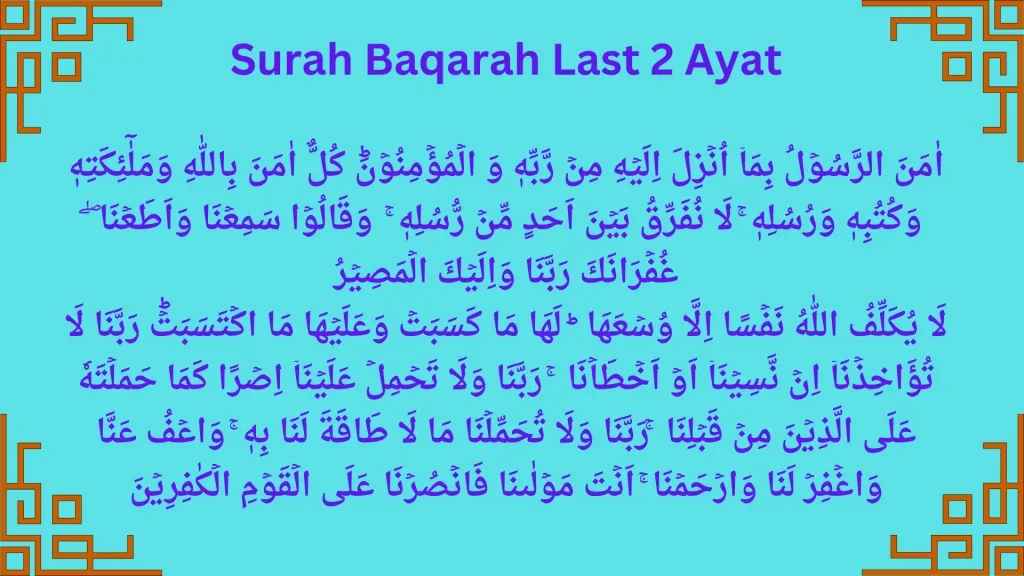
      “آمَنَ الرَّسُولُ بِمَا أُنزِلَ إِلَيْهِ مِن رَّبِّهِ وَالْمُؤْمِنُونَ كُلٌّ آمَنَ بِاللَّهِ وَمَلَائِكَتِهِ وَكُتُبِهِ وَرُسُلِهِ لَا نُفَرِّقُ بَيْنَ أَحَدٍ مِّن رُّسُلِهِ وَقَالُوا سَمِعْنَا وَأَطَعْنَا غُفْرَانَكَ رَبَّنَا وَإِلَيْكَ الْمَصِيرُ”
    • Ayah 286:
      “لَا يُكَلِّفُ اللَّهُ نَفْسًا إِلَّا وُسْعَهَا ۗ لَهَا مَا كَسَبَتْ وَعَلَيْكُم مَا اكْتَسَبْتُمْ ۗ رَبَّنَا لَا تُؤَاخِذْنَا إِن نَّسِينََا أَوْ أَخْطَأْنَا ۚ رَبُّنَا وَلَا تَحْمِلْ عَلَيْنَا إِصْرًا كَمَا حَمَلْتَهُ عَلَى الَّذِينَ مِن قَبْلِنَا ۚ رَبُّنَا وَلَا تُحَمِّلْنَا مَا لَا طَاقَةَ لَنَا بِهِ وَاعْفُ عَنَّا وَاغْفِرْ لَنَا وَارْحَمْنَا ۚ أَنتَ مَوْلَانَا فَانصُرْنَا عَلَى الْقَوْمِ الْكَافِرِينَ”

    Translation of the Last Two Ayats of Surah Baqarah (English & Urdu):

    Ayah 285:

    (English Translation)
    “The Messenger has believed in what was revealed to him from his Lord, and so have the believers. All of them have believed in Allah and His angels and His books and His messengers, saying, ‘We make no distinction between any of His messengers.’ And they say, ‘We hear and we obey. Grant us Your forgiveness, our Lord. To You is the final destination.’”

    (Urdu Translation)
    “رسول نے جو کچھ اپنے رب کی طرف سے اس پر نازل کیا ہے اس پر ایمان لایا اور ایمان لانے والے سب نے ایمان لایا۔ اللہ، اس کے فرشتوں، اس کی کتابوں اور اس کے پیغمبروں پر ایمان لاتے ہیں اور کہتے ہیں کہ ہم کسی بھی پیغمبر کے درمیان تفریق نہیں کرتے۔ وہ کہتے ہیں، ہم نے سنا اور ہم نے حکم قبول کیا، اے ہمارے رب! ہمیں بخش دے، اور تیری ہی طرف لوٹنا ہے۔”)

    Ayah 286:

    (English Translation)
    “Allah does not burden a soul beyond that it can bear. It will have [the consequence of] what [good] it has gained, and you will bear [the consequence of] what [evil] you have earned. Our Lord, do not impose blame upon us if we forget or make a mistake. Our Lord, and lay not upon us a burden like that which You laid upon those before us. Our Lord, and do not burden us with that which we have no ability to bear. And pardon us; and forgive us; and have mercy upon us. You are our protector, so give us victory over the disbelieving people.”

    (Urdu Translation)
    “اللہ کسی جان کو اس کی طاقت سے زیادہ بوجھ نہیں ڈالتا۔ جو کچھ اس نے کمایا ہے وہ اسی کا ہے اور جو کچھ تم نے کمایا ہے وہ تمہارا۔ اے ہمارے رب! اگر ہم بھول جائیں یا کوئی غلطی کر بیٹھیں تو ہمیں پکڑ نہ۔ اے ہمارے رب! ہم پر ایسا بوجھ نہ ڈال جو ہم سے پہلے لوگوں پر ڈالا تھا۔ اے ہمارے رب! ہم پر وہ بوجھ نہ ڈال جس کا ہم میں تحمل نہ ہو، اور ہمیں معاف کر دے، ہمارے گناہ بخش دے اور ہم پر رحم کر۔ تم ہی ہمارا مددگار ہو، اس لیے ہمیں کافروں پر غلبہ دے۔”)

    Deep Meaning and Interpretation of the Last Two Ayats

    The Spiritual and Theological Meaning:

    • Ayah 285 emphasizes the unity of faith. The verse affirms belief in all of Allah’s messengers and guides the believers to not differentiate between them. This unity of faith is fundamental in Islam, showing that all the prophets delivered the same message of monotheism and submission to Allah.
    • Ayah 286 focuses on Allah’s mercy and justice. It assures Muslims that Allah does not impose burdens that are beyond a person’s capacity. The verse also encourages humility and repentance, with a heartfelt plea for forgiveness from Allah.

    Scholarly Interpretation (Tafsir):

    • Scholars interpret Ayah 286 as a powerful reminder that while humans are accountable for their actions, Allah’s mercy is vast, and His ability to forgive is greater than any sin. The phrase “Allah does not burden a soul beyond what it can bear” reminds believers of Allah’s understanding of human limitations and struggles.

    Significance of Reciting the Last Two Ayats

    A Source of Protection:

    • Reciting these Ayats is a protection from evil forces, harm, and misfortune. The Prophet Muhammad (PBUH) said that the last two Ayats of Surah Baqarah act as a safeguard against harm, especially when recited before sleep.

    Strengthening Faith:

    • The recitation of these verses strengthens one’s belief in Allah and fosters a deeper connection to His guidance. It reminds believers of their ultimate return to Allah, emphasizing submission to His will.

    Benefits of Reciting the Last Two Ayats Regularly

    Spiritual Benefits:

    • Inner Peace: Regular recitation calms the heart and soul. It helps believers to find tranquility amidst life’s challenges.
    • Guidance: These verses serve as a constant reminder of Allah’s guidance in our lives, encouraging us to trust in His plan.

    Physical and Emotional Benefits:

    • Reciting these Ayats has been reported to have a calming effect, reducing anxiety and bringing emotional stability. Many believers feel a sense of peace and relief when they recite these verses, especially during times of stress.

    Application in Daily Life

    How to Integrate the Last Two Ayats into Your Routine:

    • Before Sleep: Recite the Ayats before going to bed for protection from negative influences and to seek Allah’s forgiveness.
    • Morning Routine: Start your day with these verses to seek guidance and strength for the day ahead.

    Real-Life Stories of Beneficiaries:

    • Numerous stories from Islamic history describe how the recitation of these Ayats helped individuals during times of hardship, providing both spiritual and practical benefits.

    Conclusion

    The Last Two Ayats of Surah Baqarah are not just part of a Surah but a source of guidance, protection, and mercy. Whether you are a beginner or someone looking to deepen your faith, these verses offer a powerful reminder of Allah’s grace and love. Start incorporating them into your daily routine and experience the countless blessings they bring.

    Start Reciting the Last Two Ayats Today!

  • Surah Quraish: Importance, Tafsir & Spiritual Benefits

    Surah Quraish: Importance, Tafsir & Spiritual Benefits

    Introduction

    Surah Quraish is a short yet powerful chapter of the Quran, consisting of just four verses. Revealed in Makkah, this surah emphasizes Allah’s blessings upon the Quraysh tribe and highlights the importance of gratitude. Many scholars and believers recite Surah Al Quraish for protection, sustenance, and blessings in daily life.

    In this blog, we will explore the importance, tafsir (interpretation), and spiritual benefits of Surah Quraish. We will also provide its Urdu translation and reference Islamic sources such as Ibn Kathir and authentic Hadiths.

    Surah Quraish in Arabic with Urdu Translation

    سورة قريش – Arabic Text

    بِسْمِ اللَّهِ الرَّحْمَٰنِ الرَّحِيمِ
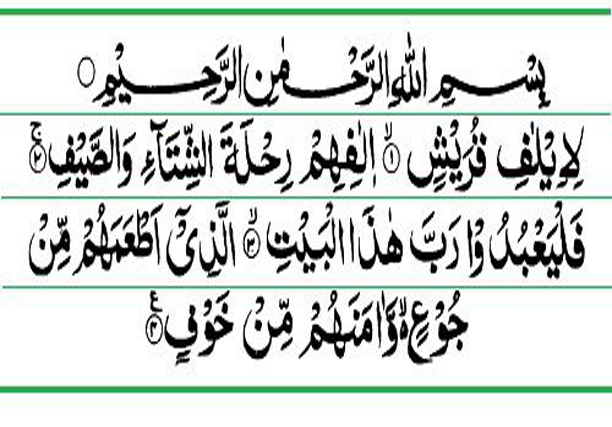
    لِإِيلَافِ قُرَيْشٍۙ (1) إِۦلَٰفِهِمْ رِحْلَةَ ٱلشِّتَآءِ وَٱلصَّيْفِ (2) فَلْيَعْبُدُوا۟ رَبَّ هَٰذَا ٱلْبَيْتِ (3) ٱلَّذِىٓ أَطْعَمَهُم مِّن جُوعٍۢ وَءَامَنَهُم مِّنْ خَوْفٍۭ (4)

    Urdu Translation (اردو ترجمہ)

    اللہ کے نام سے جو بڑا مہربان، نہایت رحم والا ہے

    1. قریش کے مانوس ہونے کی وجہ سے،
    2. ان کے سردی اور گرمی کے سفر کو آسان بنانے کی وجہ سے،
    3. پس انہیں اس گھر کے رب کی عبادت کرنی چاہیے،
    4. جس نے انہیں بھوک سے نجات دی اور انہیں خوف سے امن دیا۔

    This Urdu translation of Surah Quraish helps in better understanding its meaning and significance.

    Tafsir of Surah Quraish (Explanation & Meaning)

    Historical Background

    Surah Quraish was revealed to remind the Quraysh tribe of Allah’s special blessings upon them. The Quraysh were the custodians of the Kaaba, and they enjoyed great respect and security due to their status. Allah blessed them with:

    • Trade security – They could travel safely for business.
    • Economic prosperity – Their trade routes brought wealth.
    • Peace and stability – Unlike other tribes, they lived in safety.

    Verse-by-Verse Explanation

    1. “For the protection of the Quraysh” – This verse highlights Allah’s favor in granting stability to the Quraysh.
    2. “Their protection during winter and summer journeys” – The Quraysh conducted trade trips to Syria in summer and Yemen in winter without fear.
    3. “So let them worship the Lord of this House” – Allah reminds them to be grateful and worship Him alone.
    4. “Who provided them food against hunger and secured them from fear” – Allah granted them both sustenance and security, which they should acknowledge.

    This Tafsir of Surah Quraish shows how Allah’s blessings demand gratitude and worship.

    Surah Quraish Benefits & Spiritual Rewards

    Many scholars and hadiths highlight the virtues of reciting Surah Quraish. Some of its key benefits include:

    1. Protection from Hunger & Poverty

    • Reciting it benefits those who seek sustenance (rizq) and financial stability.
    • It is believed that regular recitation can bring barakah (blessings) in one’s livelihood.

    2. Safety During Travel

    • Many scholars suggest that reciting this Surah before travel ensures a safe and secure journey.
    • It protects from accidents and unexpected difficulties.

    3. Protection from Fear & Anxiety

    • This surah is often recited for peace of mind and relief from anxiety.
    • It reminds believers that Allah is the ultimate protector.

    4. Strengthening One’s Faith (Iman)

    • The Surah reminds us of Allah’s favors, which increases gratitude and faith.

    5. Spiritual & Physical Healing

    • Some Islamic scholars believe that this Surah can be used in ruqyah (spiritual healing).
    • It provides protection against negative energy and unseen harms.

    Why Should You Recite Surah Quraish Daily?

    1. Short and easy to memorize – Ideal for beginners.
    2. Offers worldly and spiritual benefits – Helps in rizq (sustenance) and security.
    3. Can be recited in prayers – Used in daily Salah.
    4. A reminder of gratitude – Teaches contentment and thankfulness.

    Authentic Islamic References on Surah Quraish

    To ensure credibility, here are some Islamic references supporting the significance of this Surah:

    Hadith References

    📖 Prophet Muhammad (PBUH) said:
    “Whoever recites Surah Quraish, it is as if he has circumambulated (performed Tawaf) around the Kaaba and gained its blessings.”
    (Reference: Tafsir Ibn Kathir)

    📖 Imam Al-Suyuti mentions:
    “Surah Quraish brings ease in provision and prevents hardship.”

    Tafsir Sources

    1. Tafsir Ibn Kathir – Discusses historical context and blessings of Quraysh.
    2. Tafsir Ma’ariful Quran – Explains the deeper spiritual lessons.

    These references highlight the Surah’s importance in Islamic teachings.

    Conclusion

    Surah Quraish is more than just a short chapter of the Quran—it is a powerful reminder of Allah’s blessings. By reciting it regularly, believers can experience financial ease, protection, and spiritual peace.

    Whether you seek sustenance, safety, or a stronger connection with Allah, incorporating this Surah into daily recitation can be highly beneficial.

    May Allah bless us with the guidance and understanding of His divine words. Ameen. 🤲

  • Surah Al Fatiha in Urdu with Translation & Easy Explanation

    Surah Al Fatiha in Urdu with Translation & Easy Explanation

    Introduction

    Surah Al Fatiha, also known as “The Opening,” is one of the most significant chapters in the Quran. It is recited in every unit of the Muslim prayer (Salah) and holds great importance in daily life. For many, understanding Surah Al Fatiha in Urdu with translation and explanation enhances the spiritual experience. This blog will provide a clear translation of Surah Al Fatiha in Urdu along with an easy-to-understand explanation, benefits, and the deeper meanings behind this beautiful chapter.

    What is Surah Al Fatiha?

    Surah Al Fatiha is the 1st chapter of the Quran, consisting of 7 verses. It is a Makki Surah, revealed in Makkah, and often referred to as the essence of the Quran. The Surah is recited by Muslims during their daily prayers (Salah), and it encapsulates the essence of worship, gratitude, and seeking guidance from Allah.

    Surah Al Fatiha in Urdu with Translation

    Here is the translation of Surah Al Fatiha in Urdu:

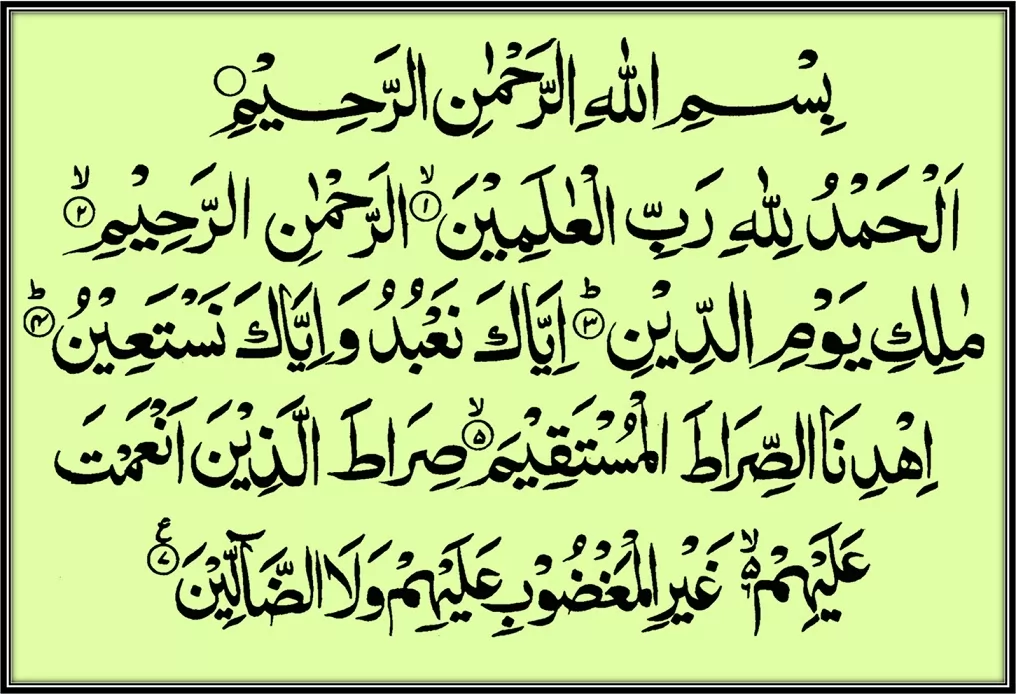
    بِسْمِ اللّٰہِ الرَّحْمٰنِ الرَّحِیْمِ
    ا
    لْحَمْدُ لِلّٰہِ رَبِّ الْعٰلَمِینَ
    الرَّحْمٰنِ الرَّحِیْمِ
    مٰلِکِ یَوْمِ الدِّینِ
    إِیَّاکَ نَعْبُدُ وَ إِیَّاکَ نَسْتَعِینُ
    اِہْدِنَا الصِّرَاطَ الْمُسْتَقِیمَ
    صِرَاطَ الَّذِینَ أَنْعَمْتَ عَلَیْهِمْ غَیْرِ الْمَغْضُوبِ عَلَیْهِمْ وَ لَا الضَّلِّینَ

    Translation (Urdu)

    1. بِسْمِ اللّٰہِ الرَّحْمٰنِ الرَّحِیْمِ
      “اللہ کے نام سے، جو نہایت رحم والا، بڑا مہربان ہے۔”
    2. الْحَمْدُ لِلّٰہِ رَبِّ الْعٰلَمِینَ
      “سب تعریفیں اللہ کے لیے ہیں، جو تمام جہانوں کا پروردگار ہے۔”
    3. الرَّحْمٰنِ الرَّحِیْمِ
      “وہ رحم والا، نہایت مہربان ہے۔”
    4. مٰلِکِ یَوْمِ الدِّینِ
      “جو روز جزا کا مالک ہے۔”
    5. إِیَّاکَ نَعْبُدُ وَ إِیَّاکَ نَسْتَعِینُ
      “ہم تیری ہی عبادت کرتے ہیں اور تجھ سے مدد مانگتے ہیں۔”
    6. اِہْدِنَا الصِّرَاطَ الْمُسْتَقِیمَ
      “ہمیں سیدھے راستے کی رہنمائی دے۔”
    7. صِرَاطَ الَّذِینَ أَنْعَمْتَ عَلَیْهِمْ غَیْرِ الْمَغْضُوبِ عَلَیْهِمْ وَ لَا الضَّلِّینَ
      “ان لوگوں کا راستہ جن پر تو نے انعامات کی بارش کی، نہ کہ ان لوگوں کا جو غصہ کے شکار ہوئے اور نہ ہی ان کا جو گمراہ ہوئے۔”

    Easy Explanation of Surah Al Fatiha

    Surah Al Fatiha is a beautiful supplication that summarizes the core themes of the Quran. Here’s an easy explanation of the meaning behind each verse:

    1. بِسْمِ اللّٰہِ الرَّحْمٰنِ الرَّحِیْمِ

    This verse reminds us to begin everything with Allah’s name, invoking His mercy and compassion. “Rahman” refers to His kindness to all creatures, while “Rahim” is His specific mercy towards believers.

    2. الْحَمْدُ لِلّٰہِ رَبِّ الْعٰلَمِینَ

    This verse highlights that all praise belongs to Allah alone. He is the Lord of all that exists in the universe, showing His omnipotence and dominion over everything.

    3. الرَّحْمٰنِ الرَّحِیْمِ

    Here, we reiterate Allah’s mercy and His ability to forgive, reminding us of the constant need for His compassion in our lives.

    4. مٰلِکِ یَوْمِ الدِّینِ

    Allah is the Sovereign of the Day of Judgment. This verse emphasizes His ultimate authority on the Day of Reckoning, where all will be judged.

    5. إِیَّاکَ نَعْبُدُ وَ إِیَّاکَ نَسْتَعِینُ

    In this verse, we commit to worship Allah alone and seek His help in all matters of our lives. This signifies the importance of seeking His guidance and assistance in everything.

    6. اِہْدِنَا الصِّرَاطَ الْمُسْتَقِیمَ

    We ask Allah to guide us to the straight path, which is the path of righteousness, truth, and faith. This is the way of the Prophets and righteous individuals.

    7. صِرَاطَ الَّذِینَ أَنْعَمْتَ عَلَیْهِمْ غَیْرِ الْمَغْضُوبِ عَلَیْهِمْ وَ لَا الضَّلِّینَ

    This verse specifies the path of those who have received Allah’s grace, such as the Prophets and righteous people, contrasting it with the paths of those who have incurred His wrath or gone astray.

    Benefits of Reciting Surah Al Fatiha

    Surah Al Fatiha is not just a chapter to recite in prayers; it holds numerous benefits:

    1. Healing and Protection: It is believed that reciting Surah Al Fatiha brings spiritual and physical healing. It is often recited for those who are ill or in distress.
    2. Guidance and Blessings: The Surah asks for guidance from Allah to follow the right path, leading to success in this world and the hereafter.
    3. An Essential Part of Salah: Surah Al Fatiha is recited in every Rak’ah of Salah, reinforcing the connection between the worshipper and Allah.
    4. Boosts Faith and Spirituality: Regular recitation helps in strengthening faith and deepening one’s connection to Allah.

    Surah Al Fatiha: A Comprehensive Guide

    Understanding Surah Al Fatiha is essential for every Muslim. Its simple yet profound message conveys the essence of worship and submission to Allah. When recited with understanding, it serves as a reminder of our dependence on Allah and His mercy.

    Surah Al Fatiha in Urdu PDF

    For those who wish to read and learn the Surah with translation, you can find a Surah Al Fatiha in Urdu PDF on several Islamic websites and apps. This is useful for beginners who want to read the Surah along with its meaning at their own pace.

    Conclusion

    Surah Al Fatiha is the heart of the Quran and a powerful prayer that guides Muslims towards righteousness. By understanding its meaning and reciting it sincerely, one can strengthen their faith and build a closer relationship with Allah. Whether you are a beginner or a seasoned reciter, the Urdu translation and explanation of Surah Al Fatiha can enhance your spiritual journey.